
Call : 1800 571 464
Call : 1800 571 464
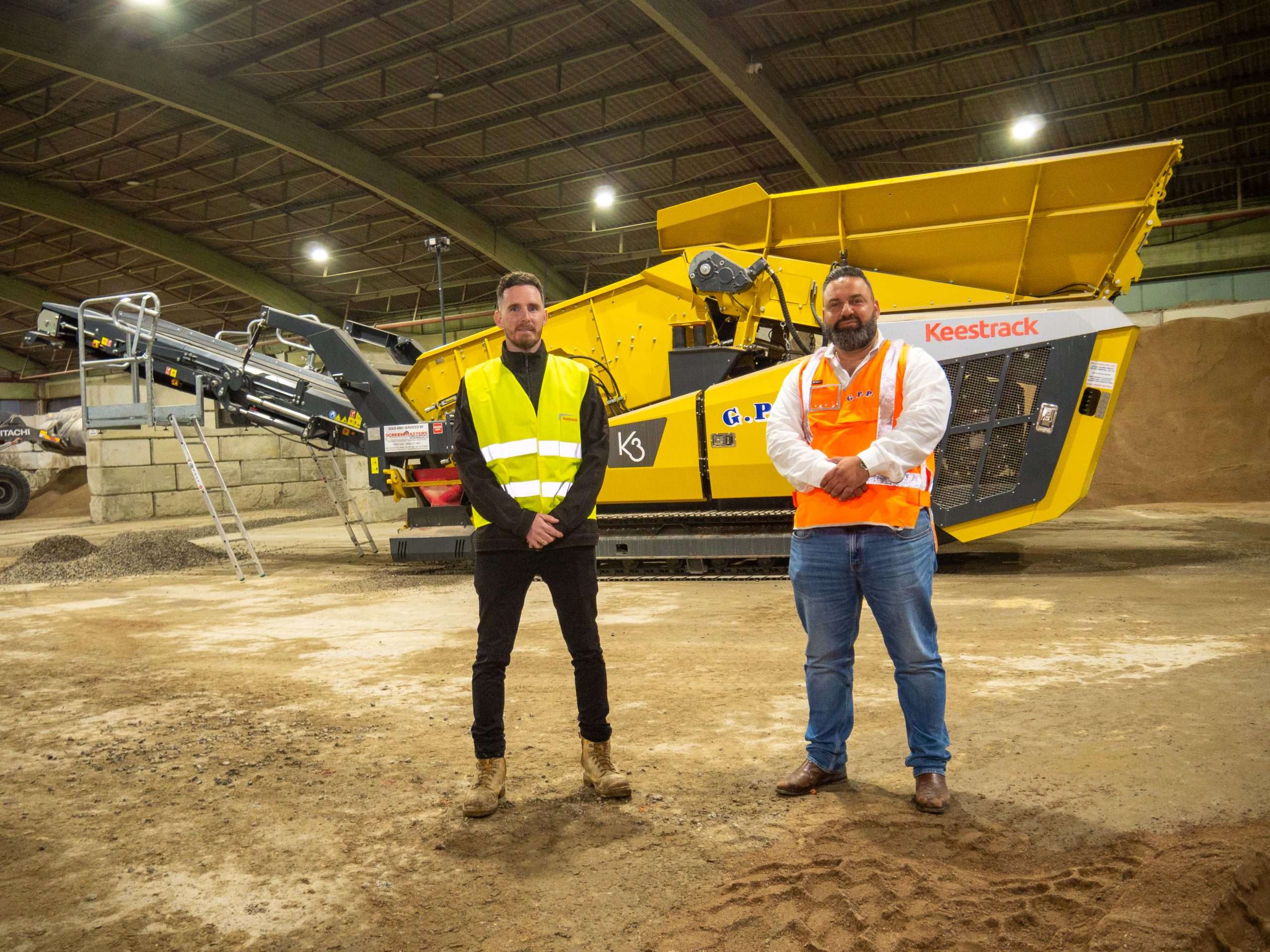
How the Keestrack R3h Crusher and K3h Screener from Screenmasters transformed G.P.P.’s fortunes.
G.P.P. started life as Excavation Demolition Company in 1986, founded by Peter Mitropoulos, specialising in bulk excavations in Sydney’s CBD. Thirty years ago, it opened as a licensed waste facility in Chullora. A proud, family-run business, G.P.P. is now owned by Peter’s son, Theo Mitropoulos, who inherited some serious challenges the company needed to overcome, if the company was to continue to grow.
Download Brochure Call: 1800 571 464“ We were paying twice for the same material!”– Theo Mitropoulos, Managing Director, G.P.P.
“Despite having our own waste facility here in Chullora, we had no way of processing the concrete waste in-house. Between tipping fees and buying back aggregates, our margins were getting squeezed. We needed to close that loop.”
The inefficiencies didn’t stop there.
“We’d pay twice to be able to supply those materials to our projects and to our customers. We use to lose a lot of time – with trucks going to these other facilities, waiting in the queue to tip off, then paying to dispose, paying to buy the product…It was always pay, pay, pay, everything was paying out!”
Theo also uncovered that supply was unreliable. When they needed to buy back the aggregates to supply to their customers, sometimes they weren’t available and orders couldn’t be fulfilled. This led to customer satisfaction plummeting.
HOW SCREENMASTERS HELPED REVITALISE G.P.P.
It was at this time that Theo reached out to Ciaran Lagan at Screenmasters Australia – among other suppliers – to explore options for cutting out the middlemen and bringing recycling in-house.
“ Theo looked at several options, and we weren’t the cheapest. But what mattered to him was backup service, knowing we’d be there when he needed us,”– recalls Ciaran Lagan, National Sales Manager Screenmasters Australia.
“When I first met Theo, he had a recycling facility but he wasn’t doing any recycling. He was taking the material, dumping it elsewhere for others to crush.
“With the concrete they were getting in, they were dumping it at other recycling places and then they would have to buy the crushed material back to sell on. So, they were losing a lot of money in that changeover from not processing the material, having to dump the material at a cost, and then having to buy the material back at another cost. They work in a tight space here, so they needed to maximise their footprint with specialised equipment.”
OVERNIGHT SUCCESS? NOT QUITE!
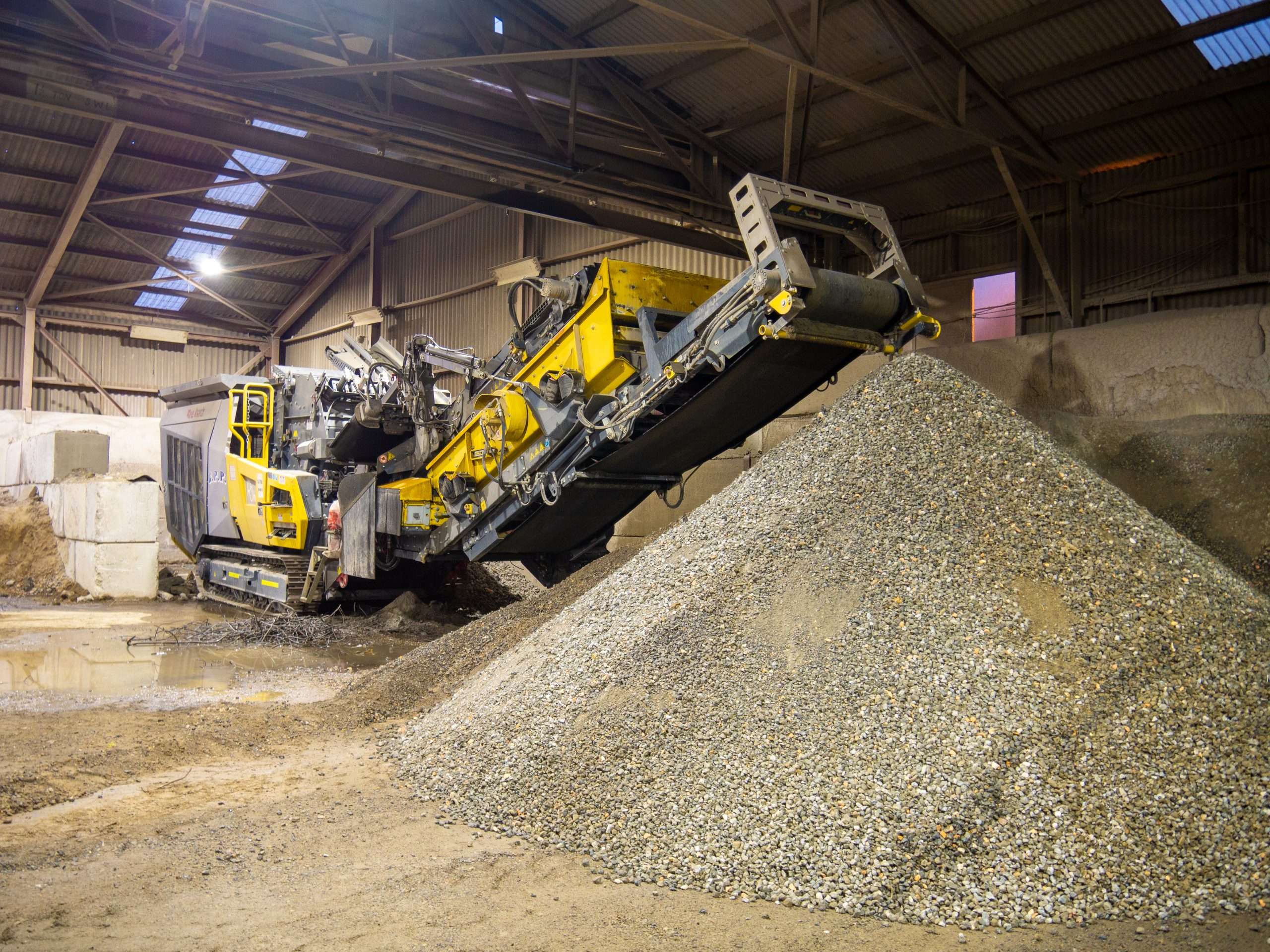
After more than a year of discussions and planning, Theo decided to invest in the Keestrack R3h Crusher. A 30-tonne unit, the R3h crushes recycled concrete into 20mm road base. Depending on how well the material is prepped, in a 20mm application it can produce between 150 and 220 tonnes an hour. Ciaran continues:
“After Theo bought the R3h, he always had in the back of his mind he’d like to make some aggregates. But with the smaller footprint he’s working with, that meant he needed a machine that could fit a specific space.”
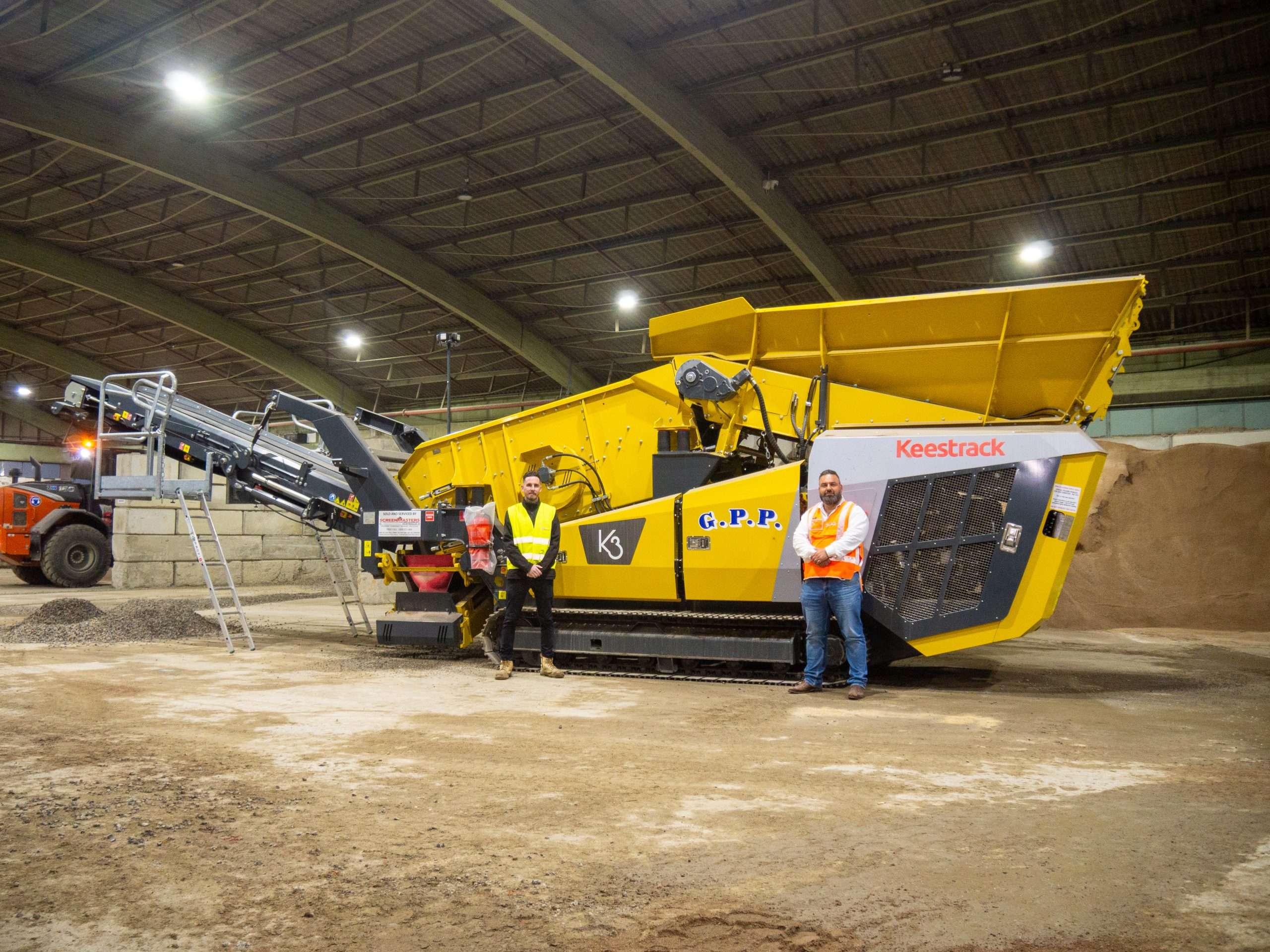
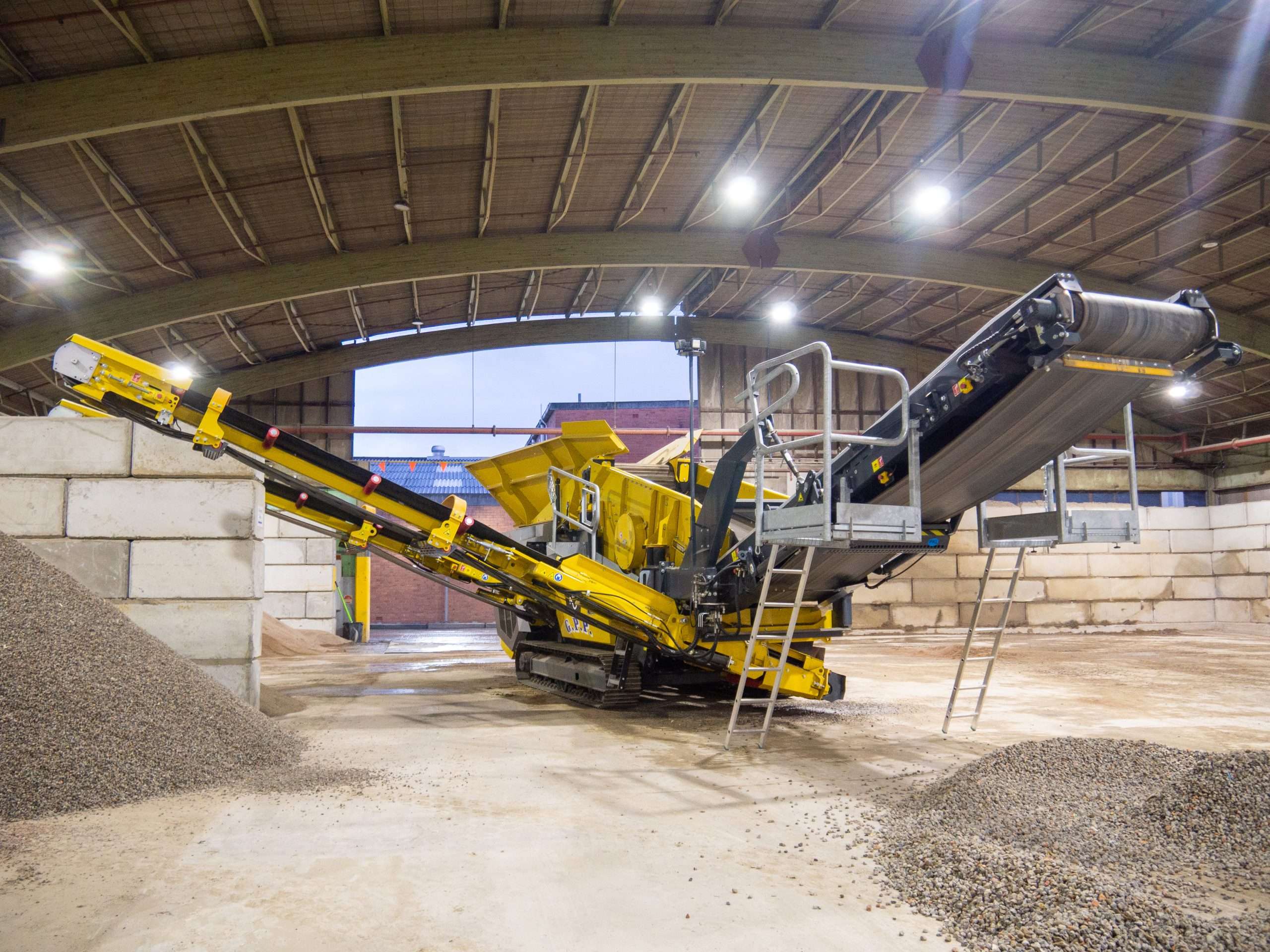
“We did have to make some custom modifications on the machine. We converted the left-hand side conveyor to the right-hand side to fit in the smaller space and fitted with bespoke picking platforms on either side of the oversize conveyor.“ Then we added the Keestrack K3h screener to their setup. It’s a double deck screen that takes that 20mm road base and separates it into three distinct products. A mobile screener is a screening plant that can separate the product into variety of different sized aggregates which they use for variety of different construction materials.
“After they integrated that machine into the process, they were able to make a 20mm, a 10mm and a crusher dust which opens up more markets for them to be able to sell more material,” Ciaran explains.
A GREAT RETURN ON (SIGNIFICANT) INVESTMENT
Theo is quick to highlight just how transformative the investment has been: “We process about three to four hundred tonnes a day. We’ve eliminated tip fees, stopped buying back material and created new revenue streams. The margins have completely changed.
He adds that having control over their materials has also improved reliability and customer service.
“The investment in this infrastructure has made a massive change to our business. We’ve got material when we need it, and we can supply our customers when they need it, which is very important to us.”
So, would Theo recommend Screenmasters to his colleagues?
“I’ll be telling them it’s a no brainer. The amount of cost savings and time that we saved, it’s completely transformed the way we work.”