
Call : 1800 571 464
Call : 1800 571 464

In industries of mining, quarrying, and aggregate production, crushing equipment plays a vital role in processing raw materials. Large rocks and mined materials need to be reduced into smaller, usable sizes before they can be transported, processed, or used in construction projects.
Whether the goal is producing railway ballast, high-grade concrete aggregates, or preparing ore for mineral processing, selecting the right combination of crushing and screening equipment is essential. The right setup not only improves production efficiency but also reduces downtime and operating costs while maintaining consistent product quality.
In this guide, we’ll take a closer look at the different types of crushers, how they work, and the various stages involved in the crushing process. Understanding the basic principles behind compression and impact crushing can help operators and engineers design more efficient processing systems.
A crusher is a machine designed to reduce large rocks, ores, or construction materials etc into more manageable sizes such as gravel or dust.
It works by applying mechanical force to break the internal bonds of the material. This process transforms raw feed material into products that can be used directly in construction or sent for further processing.
In simple terms:A crusher is a mechanical device that reduces the size of solid materials by applying force, usually through compression or impact.
Although crushing equipment is often mentioned together with screening equipment, they perform different tasks.
In most processing plants, these two systems work together. After material is crushed, it passes through screens that sort it by size. Any oversized material is sent back to the crusher for further reduction until it meets the required specification.
Crushing typically doesn’t happen in just one step. Instead, the material is gradually reduced through several stages. This staged approach helps improve efficiency and reduces wear on the equipment.
Primary crushing is the first stage of size reduction after blasting or extraction. Primary crushers must handle:
Once the material has been reduced in the primary stage, it moves to secondary crushing.
Here, the goal is to further reduce the size and create a more uniform product.
Secondary crushers focus more on size consistency rather than simply handling large volumes. Cone crushers and impact crushers are commonly used in this stage.
Tertiary crushing is usually the final stage of the crushing process.
This stage is particularly important when producing materials for:
Tertiary crushers operate with smaller feed sizes and tighter settings to achieve precise particle sizes and better particle shape.
The selection of different types of crushers depends on several factors, including material hardness, abrasiveness, moisture content, and the desired final product.
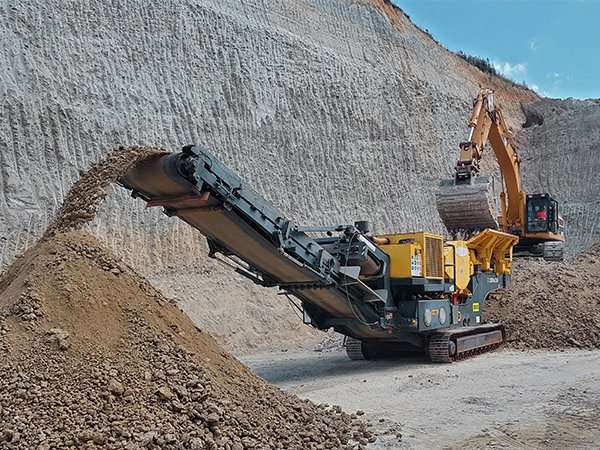
Jaw crushers are one of the most widely used crushers, especially for primary crushing.
They use a V-shaped chamber made up of two plates:
An eccentric shaft moves the swing jaw back and forth, compressing material against the fixed plate and breaks it into smaller pieces.
Cone crushers are commonly used in secondary and tertiary crushing.

Material is compressed between:
The final product size is controlled by the Closed Side Setting (CSS), which is the smallest gap between the crushing surfaces.
Cone Crushers are known for consistent size output and high production capacity.
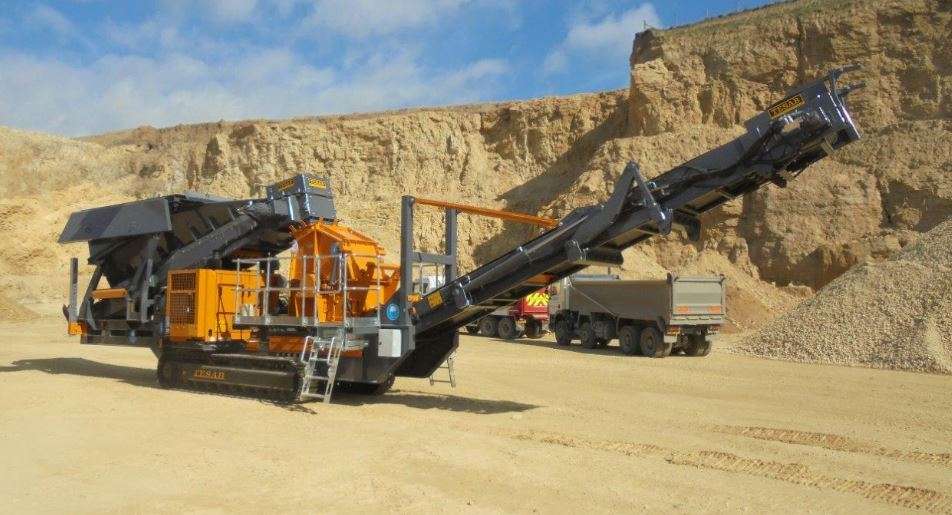
Impact crushers break material using high-speed impacts rather than compression.
A fast-spinning rotor equipped with blow bars strikes the material and throws it against impact plates inside the crusher. The force of the collision breaks the rock into smaller pieces.
Main Advantage
Produces highly cubical aggregates, ideal for construction applications.
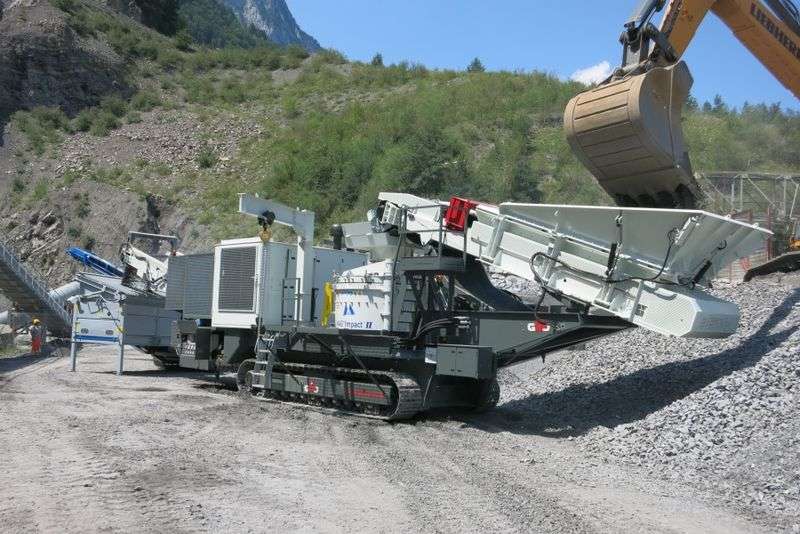
VSI crushers are typically used in the final stage of crushing, especially when producing sand or improving particle shape.
Material is accelerated by a high-speed rotor and thrown against a crushing chamber using:
Choosing the right crusher can have a big impact on both production efficiency and operating costs. Several factors should be considered when selecting crushing equipment.
Hard and abrasive materials usually perform better with compression crushers like jaw or cone crushers because they tend to cause less wear on the machine.
Understanding the size of the input material and the required output size helps determine how many crushing stages are needed.
Crushers must be able to handle the required production rate, often measured in tons per hour (TPH).
Some operations use fixed crushing plants designed for long-term production, while others rely on mobile crushers that can be moved between job sites.
In many mining operations, jaw crushers are used for primary crushing because they can handle large rocks and heavy loads. For secondary and tertiary stages, cone crushers are often preferred because they can efficiently process hard ores and produce consistent output sizes.
The main difference is where they are used in the crushing process.
Jaw crushers are typically used for primary crushing, breaking large rocks into smaller pieces. Cone crushers are used later in the process for secondary or tertiary crushing, providing more precise size reduction.
Jaw crushers use compression to break rock and are better suited for hard and abrasive materials.
Impact crushers use high-speed impacts to break materials, which makes them more suitable for softer rocks like limestone and for producing more cubical aggregates.
Cone crushers use compression and work well with hard, abrasive materials, often resulting in lower wear costs.
Impact crushers rely on high-speed impacts and produce better particle shape, but they tend to wear faster when used with abrasive materials.
Several factors can influence how much material a crusher can process, including:
The Closed Side Setting (CSS) is the minimum distance between the crushing surfaces at the bottom of the chamber.
This setting determines the maximum size of the crusher’s output material. A smaller CSS produces finer material but may reduce throughput, while a larger CSS increases capacity but results in coarser product sizes.
Replacement frequency depends on the abrasiveness of the material, the throughput volume, and the type of crusher. Highly abrasive granite will wear down jaw liners or cone mantles much faster than softer limestone or recycled aggregates.
The replacement frequency of wear parts depends on several factors:
Highly abrasive materials such as granite or high-silica rock can wear out components like jaw plates, cone mantles, and blow bars much faster than softer materials like limestone or recycled aggregates. Regular inspections help prevent unexpected downtime.